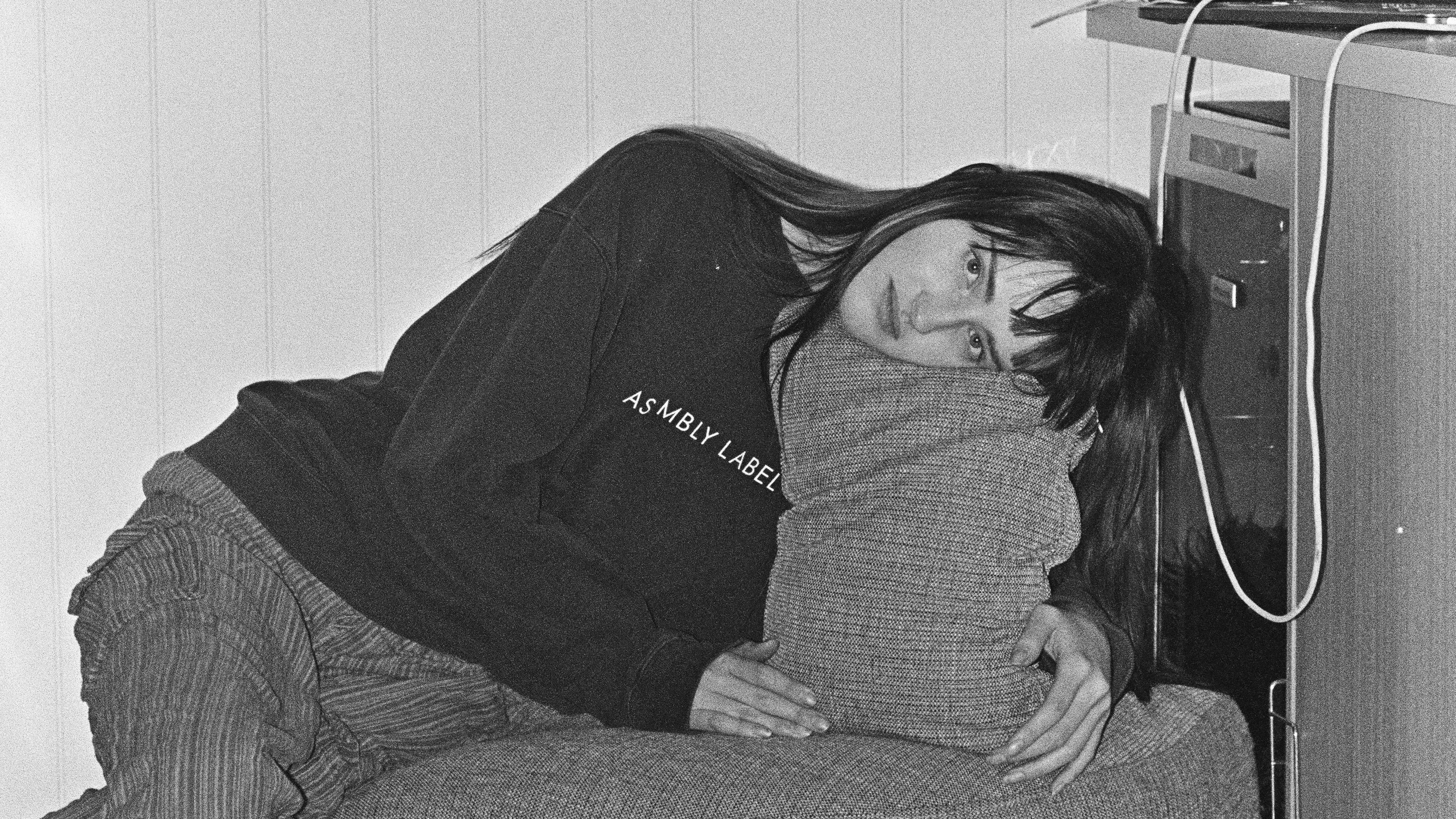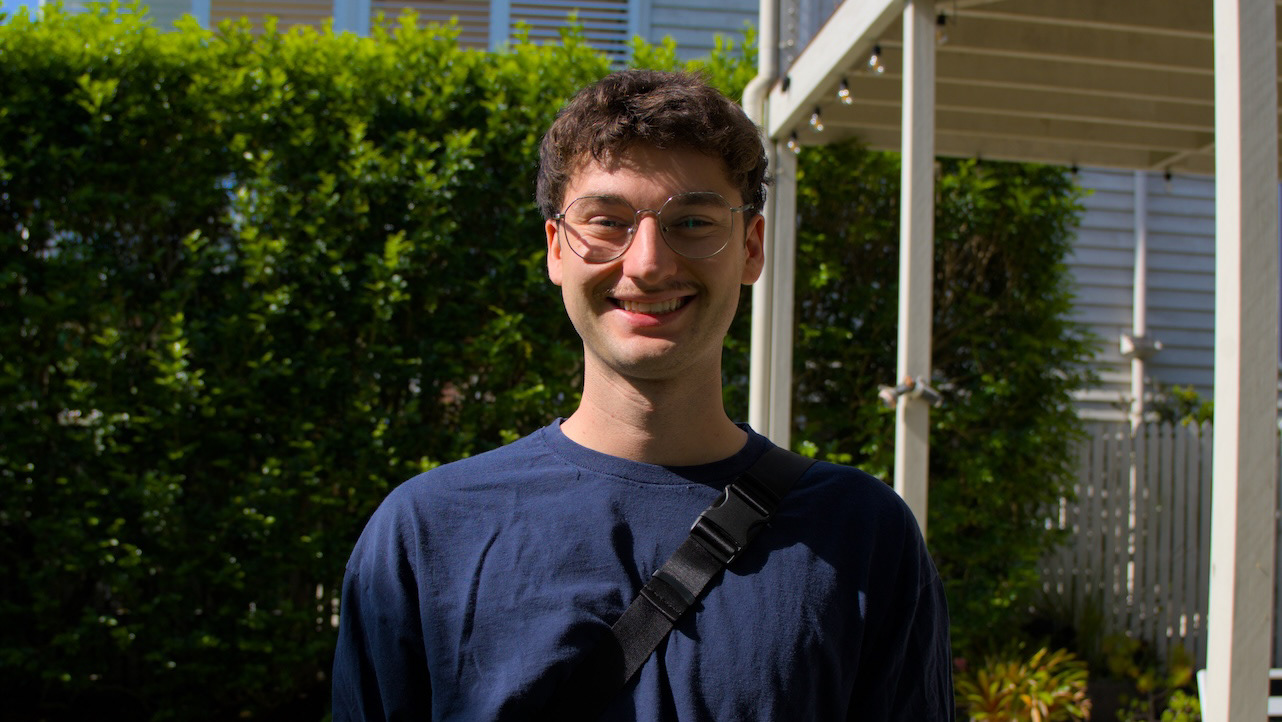
I’ve known Luca Thomas for over four years. He’s a long-term collaborator and a close friend, someone whose way of thinking continues to quietly shape the work around him. Luca is a writer and director, currently a university student and emerging filmmaker, and has recently started his own production label, Picture Arcadia, where he works alongside Bianca Andreo-Tuma , and frequent collaborators Sebastian Wells Chavez and Jade Sophia. The label feels less like a natural extension of how he already works: carefully, collaboratively, and with an eye toward the long term.
Luca’s background is in writing and literature, and that foundation still defines his approach to filmmaking. He doesn’t arrive at ideas casually. He thinks them through deeply, sometimes to a point where it can feel like he’s already several steps ahead of the conversation. He speaks like a tired poet, circling ideas until they land exactly where he wants them.
As he puts it, “My name is Luca Thomas and I’m a writer/director. My background was in writing and literature, before I started filmmaking and now I’m enjoying the beautiful process of collaborating with artists of every medium as we realise my films.” What he wants from the work is simple and precise. “I hope to have my sad, funny films play in the theatre, where people can experience them for themselves!”
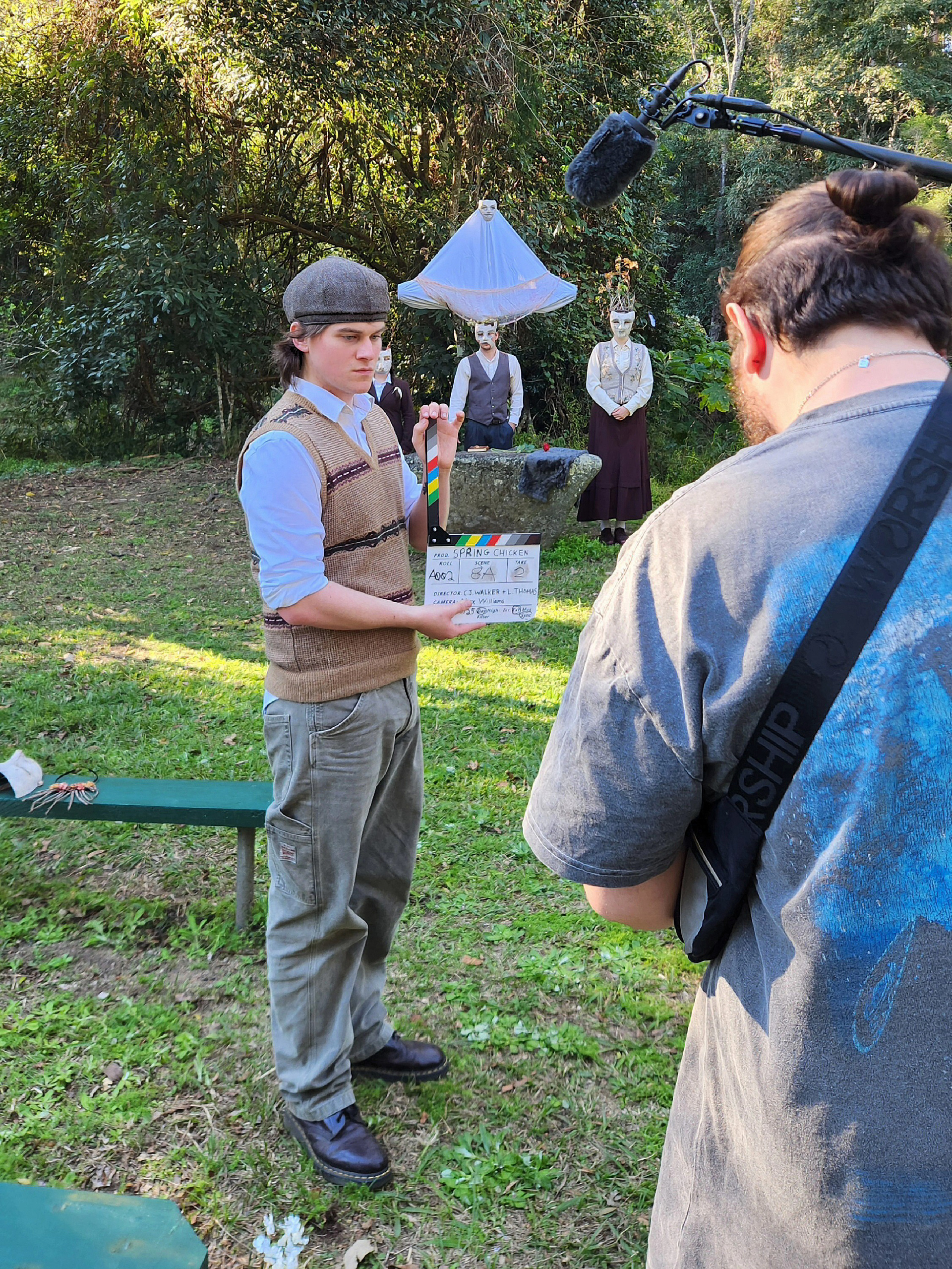
I worked with Luca as a co-writer and co-director on Spring Child, a film conceived and executed within a 48-hour timeframe for Sydney Underground’s national competition. The limitations of that process forced clarity early on. According to Luca, “This was all in the nature of the location, the timeframe and the context. Cameron and I had 48 hours to make this so we did some extra work in the pre-production and in establishing our shared vision of the film.”
That shared vision quickly took shape. “As it turns out, our shared vision looked like a melodramatic, cult horror,” he says. The tone emerged from a meeting point between our sensibilities. “Cameron’s style is very much engrossed in his love of genre fiction like sci-fi and periods and such and I loved films about restraint and messy relationships and spinning real human dynamics with some surrealist take.” What we arrived at sat somewhere between those instincts. “So, we landed on a sort of camp, magical realism wherein we could tie our metaphor. The halfway point was really something to see.”
The shoot itself was demanding in ways that still linger. “The exhaustion, the fatigue, no one should really ever do this, it’s just horrible!” Luca says. Time has softened that memory. “I mean in hindsight it’s fantastic. I look back and think, wow I did that.” The pace left little room for comfort. “In the gauntlet of a 10 minutes film worth of shooting schedule in 2 days, tensions were high and morale had to be carefully monitored.”
What I value most about working with Luca is how seriously he treats collaboration. “The process of collaborating can’t really be sorted into pros and cons, more an understanding of what it means to collaborate,” he explains. Because we were co-writing and co-directing, “the vision was a shared experience.” That came with friction early on. “At times, as our shorthand was still improving, I could tell he wanted things in a slight different direction, and me for him as well.”
What mattered was what replaced that friction. “As time went on we learned to leave our egos at the door because it wasn’t about finding the hodgepodge shape of what his vision and my vision combined would look like, it was about finding the new kind of vision we could only create together.” Luca describes it with characteristic bluntness. “As if our creative union meant a human Luca/Cameron hybrid for 48 hours only (ew).”
Luca speaks with real appreciation for the actors who carried Spring Child: Zoe Beirne, Daniel Johnson, Bronte Zerafa, and Amy Finocchiaro. “The cast was fabulous. They took the brief so quickly and were super easy to direct the way we wanted.” Performance is central to how he reads a film. “They brought the film out for us to see and for that I’m very thankful.”
Although Spring Child leaned into an Australian Gothic tone, Luca’s wider body of work often gestures elsewhere. “Aside from Spring Child, where we leaned into an Australian Gothic perspective, most of my films have been inspired by and have tried to emulate various locations across the UK and greater Europe.” He’s conscious of how place shapes tone. “One of my two upcoming short films: ‘The Runaway Femme’ is set in a location that is meant to feel like a blend of Berlin, London and various old German, American films like Paris, Texas.”
That sensibility extends into his longer-form ambitions. “My feature film that I’ve written and am seeking to get produced is also centrally British in its tone, themes and setting.” For Luca, these influences aren’t about imitation so much as resonance; “I think I also come at it from a slightly non-literal appreciation,”
Luca is currently beginning to plan his first feature film, as am I. What excites me is not just the work ahead, but the fact that we’re learning in parallel. He thinks deeply, commits fully, and brings a quiet seriousness to collaboration that I trust. I’m excited to keep growing alongside him, and to welcome anyone who wants to come for the ride.
Picture Arcadia and Short Walk Studios are teaming up once again for 'Gorilla, Guerilla', a comedy short-film about a group of jungle-fevered filmmakers whose set is targeted by a wild gorilla; shooting April 2026.