Some collaborators arrive slowly.
Others arrive under pressure.
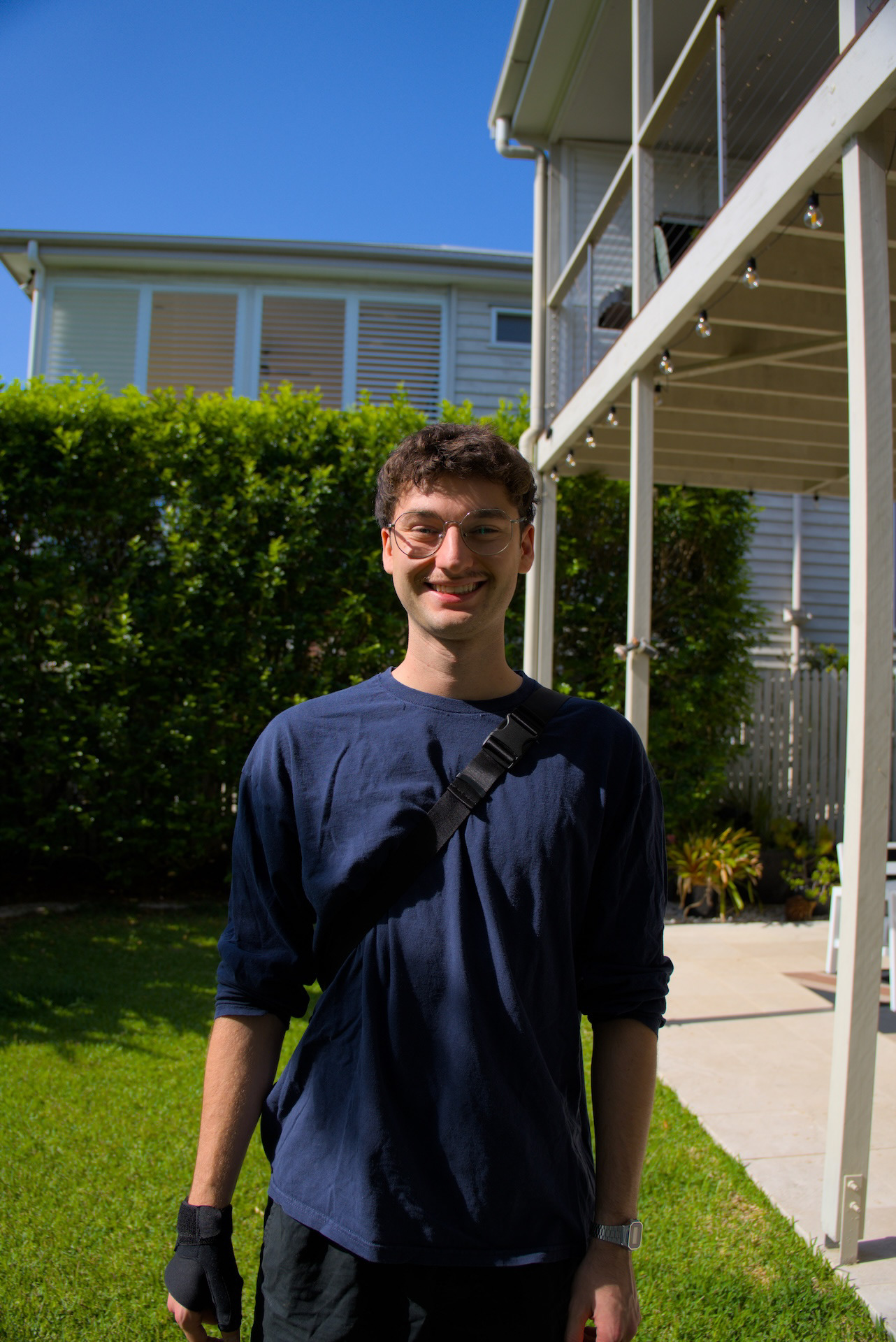
I’ve known Seb for just over half a year, and most of that time has been spent building. Tight deadlines. High stakes. Little room for ego or existential spirals. When you meet someone in those conditions, you get a fairly accurate read.
Seb’s background isn’t in acting like mine. He holds a Bachelor of Business Management, majoring in marketing. Strategy. Systems. Audience behaviour. Spreadsheets, probably.
Film wasn’t the original plan.
But visuals always were.
He found himself assisting on small projects with our now shared friend Luca Thomas. What began as overlap became commitment. One thing that’s become obvious very quickly is this: when something interests Seb, he moves. He doesn’t sit on the idea for six months waiting for the “right time.” He learns the skill, tests it, and figures it out in motion.
I envy that slightly. Maybe more than slightly.
Editing is where that instinct has taken off. He’s developing quickly. Calm under deadline. Surprisingly ruthless with pacing. Comfortable making decisions most people would postpone. Producing and storyboarding are evolving alongside it, driven by the same forward momentum.
When I asked where filmmaking stopped being passive entertainment and started becoming something more personal, this is how he put it:
“There was never any doubt in my mind that movies were going to be a big part of my life, but up until recently they were only ever entertainment. I was about two and a half years into my business degree when I looked at the job prospects and saw that most of it was administration. Marketing, analytics, content creation. It interested me, but it usually came down to sales tactics to fuel the machine.
“I got fed up with capitalism as a concept. I realised life is too short to work a job you don’t want just to earn a paycheck that lets you do what you actually care about. So I thought, why not skip the middleman, get paid no money to do what I want to do, and figure the rest out. And so, here I am.”
There’s something refreshingly unceremonious about that.
On learning in real time, he keeps it simple:
“I think learning is one of the most valuable skills anyone can have. A lifelong learner will be happy for the rest of their life. They’ll never be bored, and they’ll gain a deeper appreciation for the little things other people think don’t matter.”
His shift in perspective shows up clearly in how he talks about genre:
“I like all genres. I used to think musicals were dumb, dramas were too boring, horror was too scary, and that comedy reigned supreme. It wasn’t until I took an introduction to film course at university and later a genre course that I truly gained an appreciation for genre, and honestly for film as a medium. As an art form. As a way to bring people together. As a mode of expression.
“Film is so many things, and it’s important to keep it alive. Some people think it’s just a way for rich celebrities to make more money, but I don’t see it that way. If you open yourself up to analysing film and understanding some of the science behind it, you unlock a whole new world of enjoyment and a new way to appreciate it.”
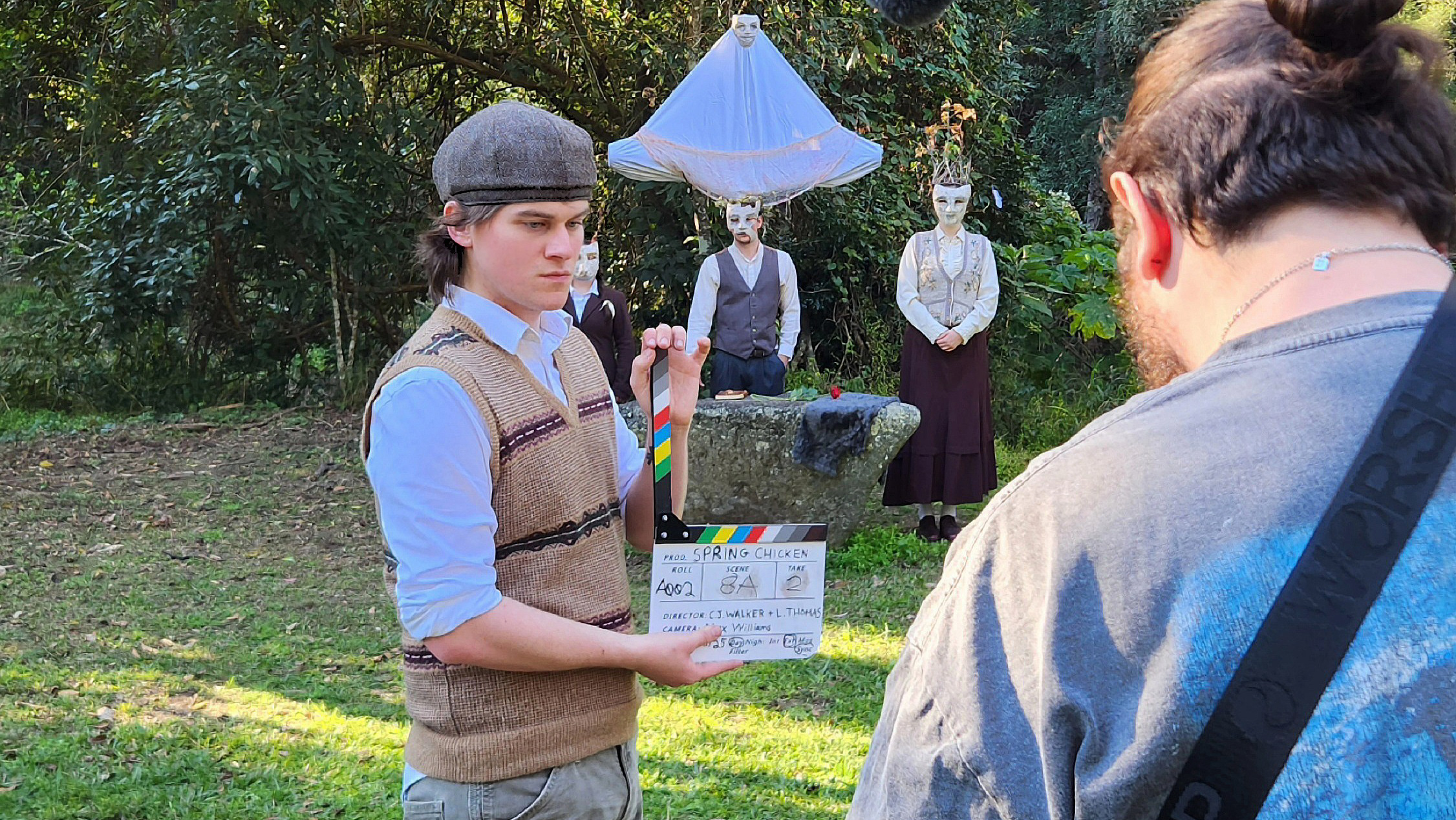
Spring Child was his first professional set. The film was a collaboration between Short Walk Studios and Picture Arcadia, working with QUT Bachelor of Fine Arts acting graduates. On that production, Seb stepped in as Associate Producer, Storyboard Artist, and Script Editor. Not exactly a “stand in the corner and observe” kind of introduction.
It clearly meant something to him.
“Spring Child was my first real film set. It was without a doubt the most stressful thing I’ve ever done, but it filled me with a joy and lust for life I’d never experienced before. That sounds corny, but it showed me what my life could be and affirmed what my life has to be.
“I am eternally grateful to Luca, to Cameron, and to everyone involved. Working with real professionals across all departments, people who were also kind and fun to be around, is a luxury. I’m lucky to have had that.”
When he talks about collaborating with the acting and film graduates on that project, there’s no cynicism:
“Working with people who want to be in the industry, who share the passion and commitment it takes to make it, was amazing. I can confidently recommend everyone on that project. Mark my words, there are some big names there.”
I wouldn’t bet against him.
Looking ahead, he’s aiming high in the least theatrical way possible.
“My next goal is to direct a couple of shorts, keep writing, direct a feature, move to a city with a bigger foothold in the industry, and ultimately build my life as a filmmaker with as many people as I can bring with me.”
Casual.
He’ll soon step into his second acting role alongside me in Picture Arcadia’s comedy Gorilla, Guerrilla, in association with Short Walk Studios. Because apparently editing, producing, storyboarding, and plotting world domination wasn’t enough.
What I enjoy most about working with Seb isn’t just his pace. It’s the lack of drama around it. No inflated sense of self. No paralysis disguised as perfectionism. If something needs to be done, he’ll do it. If something needs to be learned, he’ll learn it. And if it fails, he’ll adjust and keep moving.
That kind of energy feels increasingly important.
There’s a generation of filmmakers emerging who are less interested in waiting for permission and more interested in building the thing themselves. They’re multi-skilled, slightly impatient, and very aware that the industry is changing whether anyone likes it or not.
Seb feels like part of that shift.
And if this is what half a year looks like, I’m genuinely curious what the next five will.
IMPORTANT SIDE-NOTE: If you want to hear the sweet sounds of Seb’s american-ish accent, head over to the Close Personal Film Friends Podcast, where he reviews the hottest new films with his partner Rosie Elmer!